Sunday, August 30, 2015

What The Star Whispered

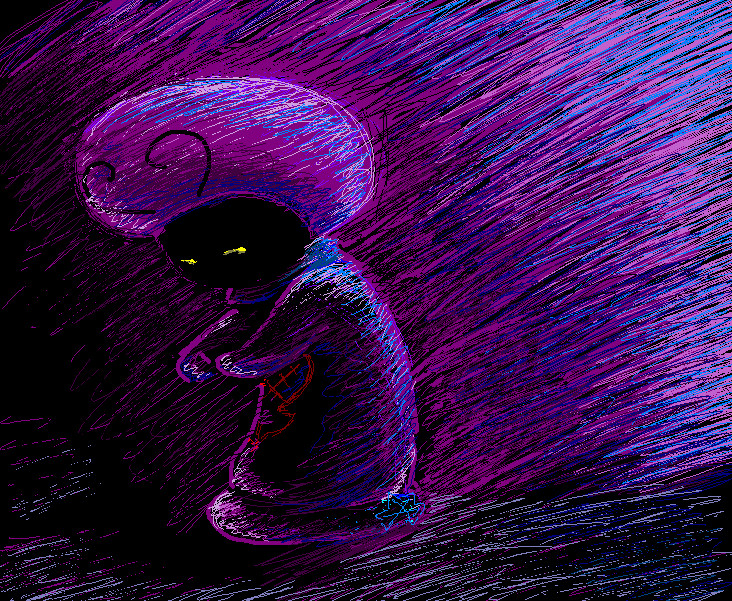
Athor Appears In A Vision
Athor, The Star That Speaks

Whereas most stars capable of communication seem ambivalent or casually destructive toward humanity, there exists a small (and yet, numberless) set of malicious stars that seem very, very interested in destroying humanity, your planet, and everything on it.

You can't really talk to stars with low-level spells, but they can talk to you. One of the most outspoken stars is named Athor.

Athor despises the writhing organics that infest the surface of your planet, and of any planet. It finds life to be a dignity-destroying debasement of the universe's natural chaos and beauty, and a departure from the sacred plan devised by the Creator. To Athor, the creation of life was an accident, and also the original sin. Fortunately, the sin can be expiated. Just get rid of all these crude carbon-based patterns that are infesting everything.

The Debased Adherents

It takes a special kind of crazy to even hear a star like Athor. It can only communicate effectively on moonless, cloudless nights, when there isn't much wind, and the sky seems so huge and empty that you could fall up into it. So you have some hapless crazy guy out in the middle of nowhere who notices that a star is whispering to him about how life is a terrible mistake and should be destroyed. If the guy seems into it, the star will start teaching him spells.

To be honest, a lot of the guys Athor gets to work for him aren't the cream of the crop. He has no idea if any of his plans are going to work, but empowering the kind of people willing to listen to obviously malicious dots of light in the sky is probably not going to help life on this planet thrive. So what the hell, Athor will give it a shot.

Their Abhorrent Inspirations

The cultists don't just want to end organic life. They want to eliminate the possibility of life. Some goals:
  • A cultist might devise and enact convoluted rituals to redirect meteor swarms toward your players' game world. Thus far, humans haven't achieved the mastery of spellcraft necessary to provoke an extinction-level event. The snake-men that used to live on this planet were much better at magic, and Athor regrets not getting them to do something a little more permanent. He thought the meteor would finish the job, but marsupial worms evolved into people and he's back in the same boat.
  • Maybe there's some deity that is in charge of ensuring the survival of the planet. Athor's cultists will spend a lot of time trying to sabotage their temples and kill their priests. Athor doesn't pay attention to anthropomorphic deities or their creation myths. He's been around a long time. The snake-men had snake-man deities, too, and look where that got them. Still, killing priests of the Sun God has proven a satisfactory diversion for Athor.
  • Athor tries to explain quantum entanglement to his cultists, but they only kind of get it. They build little reactor-shrines to try and simultaneously reverse the spin of every atom on the planet. So far, no luck. One has figured out how to entangle some of the atoms of an iron bell with the skeletal system of a sun priest, though. The cultist has some of his acolytes wailing on the bell on the regular. Bones break, blood gets everywhere, and the poor guy has no idea what's wrong and or why clerical magic can't seem to help.
  • Some of Athor's cultists are preoccupied with the idea of triggering a grey goo scenario. They set up weird laboratories full of things like black puddings and other, weirder oozes. The goal is to get them to absorb inorganic matter and reproduce so quickly that nobody can stop them from destroying the planet. So far, they've figured out how to induce fission and have at least one black pudding with volume equal to an olympic swimming pool. Athor hates oozes as much as any form of life, though, so this would only be a marginal improvement.
Donning Star-Flesh

The star has a lot of trouble imparting power to it's followers. They can't channel much magical energy at all! Anything more than a droplet of cosmic power causes immediate immolation. Which is fine, but Athor would prefer it if they could immolate some other stuff, first.

Here are some ways that Athor modifies his followers:

  • Their fire or electricity spells are changed to plasma. Whenever a creature suffers plasma damage, it is considered either fire or electricity, whichever would inflict more damage.
  • Heart Of Star-Stuff: When this cultist dies, they burst into a wash of plasma that scorches anything within 2 spaces. Creatures within that area suffer 5d6 plasma damage, Reflex half.
  • Athor's Eye: Instead of a face, this cultist has a hole full of plasma. It suffices perfectly well for most normal face functions, like seeing or eating (the cultist just shoves stuff into the crackling field of energy). It also allows them to fire a blast of otherworldly energy like that guy in the Hot Chip music video. They can use it on a target within close range, who suffers 4d6 plasma damage, Fort half. On a failed save, they are blind for the rest of the day.
  • Twinkling Body: Strange patches of twinkling black matter cover wide swath of the cultist's body. They have +20 to their maximum hit points and suffer half damage from ranged or AOE attacks, portions of which are absorbed harmlessly into the weird star-tumors.
Hey Johnny Adventure, how you even gonna
 try messing with the yellowcake-priests?
The Cult Notorious

There exist several groups of Athor-affiliated cultists:

The Yellowcake-Priests of the Vapid Desert dwell in a hovering, inverted pyramid and are probably the most scientifically advanced organization on the planet. They mine preternatural coal (uranium-infused dinosaur bones) and refine them in undead-powered centrifuges over hundreds of years. They are building a time rattleback that they are confident will cause an entire geographical region to reverse its direction of travel in time, instead heading backwards. Their experiments are so successful that they are starting to attract negative attention from beings charged with maintaining reality in good working order.

Meschiane is a wandering prophet. His schtick is pretending to be priests of other deities (Athor keeps those deities from noticing), publicly foretelling the end of the world, and then committing vile crimes. His face changes every 7 days, uncontrollably.

The Esdras Cabal is chiefly concerned with processes that reduce the stability of the fabric of reality and space. They've gotten reasonably good at allowing dreams to superimpose themselves over reality, Lathe Of Heaven style. The city they live in is becoming more horrible and otherworldly, each night. Every member of this cabal can cast dimension door at will, which makes them a total pain in the ass to catch or fight.

The Ekiq Brethren are building a "gravity engine" that will either pull the moon down into the planet or else push it off into space. They aren't having much luck even with Athor's help.

What The Star Whispered: Spells From On High

Cosmometry (1st)
You briefly perceive the relative speed, mass, and positioning of every object in your solar system. If this does not drive you insane (unlikely) and you can retain any of the information (still less likely) it is a pretty good way to find esoteric spell components.

Energon Walk (1st)
You transform into a being of pure energy (appearing as a silhouette of St. Elmo's fire) and haunt a location (a town, a dungeon, et ceteras) every night for 3d20 days. When done, you have a reasonably complete map of the place. You are completely invulnerable and tamper-proof to anything less than 7th level spells during this spell's effects. People just have to deal with one or more weird energy ghosts wandering around their hallways for a few weeks.

His Malevolent Breath (2nd)
You exhale a blast of strange energy in your immediate vicinity. Nameless NPCs within close range (or just those with 3 hit dice or less) have their bone marrow cells killed, becoming "walking ghosts" and eventually dying. Creatures with more hit dice just suffer 1d6 poison damage, no save.

Pluck From Orbit  (4th)
This spell is exactly like minute meteors except that the range is 1 mile and it can only be cast under the open sky. If your players learn this, please convey my sincere hope they enjoy its use.

Saturday, August 29, 2015

The Trebithene Blade

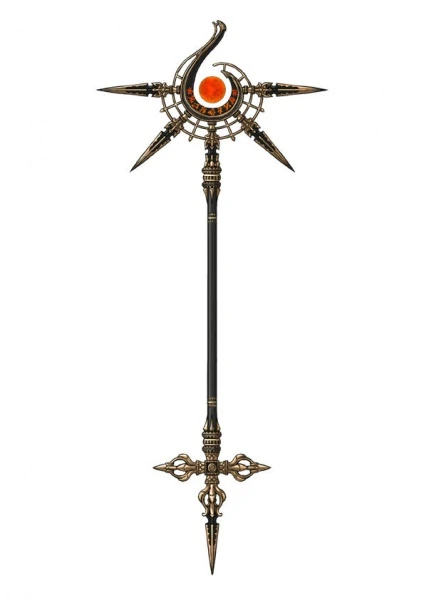
Art source.
The Trebithene Blade is the Stradivarius of swords, forged nearly three hundred years ago by Ganar of Grösh, the greatest weaponsmith of the age. Though Ganar created over a dozen magical weapons at the height of his craft, the Trebithene Blade is by far the finest. Her metal is alloyed with ore stolen from the smith-god's forge. The runes etched into her blade promise death in the language of the underworld. Most puissantly, Ganar trapped an archangel in the pommel. During combat, the angel sings terrifying hymns (everybody can hear this). The rest of the time it pleads to be set free (only the wielder can hear this).

It is called Trebithene because the blade was commissioned by the Duke of Trebithene, who used the blade in his city's struggle for independence. During the post-war period known as The Lenient Reprisals, the blade was stolen by an assassin and removed from the city. From there, the blade pops up in history every dozen years or so, always in the hands of a great fighter.

Hooks And Problems

Most people have heard of the Trebithene Blade, and definitely every fighter has. It's still on the Trebithene flag! If you are seen or known to possess it, a fighter of your level will eventually appear to challenge you to a duel to the death for it. This reoccurs every 1d4 weeks in nature, or 1d4 days in a city or large town. If you ever conduct yourself dishonorably in such a duel and word gets out, future challengers will stop relying on honorable combat and attempt to ambush you while your party is busy fighting other monsters, or else use ransom and theft. It's not that the sword is cursed, it's just so famous that people can't help but take their shot.

Your players probably find the sword in the hoard of some big dragon-style creature, still clutched in the now-skeletal hands of the last guy to own it.

Without Ambriel around, the tzitzimimeh that are normally stuck in the 
mesosphere can come down to eat people whenever they want. (Source)
The Angel In The Pommel

The archangel in the pommel is named Ambriel. Her sacred task is to protect humans from malicious stellar entities. Like, if your campaign world has an evil star that whispers recipes for destroying the planet, it's Ambriel's job to stop that. She also tries to minimize the madness that can be caused by evil astrological influences. Things have gotten really ugly during the three centuries that she has been stuck in this stupid sword.

For example, the tzitzimimeh are a swarm of impossibly evil, vaguely astrological creatures that infest the regions between stars. They spend millennia swimming the void in search of inhabited worlds from which to feed. Since Ambriel has left the picture, more and more of them are showing up.

Another problem is the madness inflicted by unlucky stars. In the normal course of events, Ambriel will wander the world, invisibly curing or warding off zodiacal inflictions of this nature, or even killing people born under particularly evil signs. For most of history, she has kept things running smoothly, but she has been gone so long that there are entire cults of star-worshippers working all kinds of unseemly magic. For example, Ambriel senses that the yellowcake-priests of the Vapid Desert have almost built a working Time Rattleback with the help of The Star That Speaks.

Ambriel is acutely aware of the problems resulting from her absence. She'll try to explain the situation to the players and beg them to free her and destroy the sword. The blade's indestructibility will prove problematic even if a player is unusually willing to listen to a suicidal talking sword. Maybe the Frog-God's obliterating gullet could dissolve it. The caustic tears of the Vornish Pope would likely suffice to corrode it, but good luck getting that guy to cry. I'm sure your players will have their own ideas.

Four-faced murder angel, comin' atcha.
The smith-god's angels don't fuck around.
The Smith-God's Metal

Three centuries is nothing to Vhalkana. Never the most social or emotionally intelligent of gods, he can nurse a grudge for literally forever. He wants the sword back because it has his ore in it, because he's curious what the mortals did with it, and because he's angry that the sword is so tacky looking to his rarified, apollonian tastes. He is also secretly afraid that it might be superior to some of his work. The quicker it is removed from mortal hands, the better.

The master thief that snuck into his godsmithy and filched the ore is long dead, his soul well-hidden. Ganar Of Grösh died of respiratory disease at an advanced age, and Vhalkana has placed his soul in the hottest part of his forge, but that is insufficient to diminish the anger of a divine being. He has worked out an arrangement with the other gods so that he receives the soul of anybody who ever wields the sword, whose souls are then smelted down and used in Vhalkana's many projects.

Stuff the divine blacksmith might do:

  • Send the sword-holder dreams in which a titanic figure places them on an anvil and demands that the sword be brought to their temple. The temple is somewhere really inconvenient, like it's called The Lightning Caldera, and in addition to being a mostly-dormant volcano it also is the place struck most often by lightning on the planet. When Vhalkana is in residence he uses the lightning to superheat his forge.
  • Curse the sword-bearer to be unable to make anything. No item crafting, obviously, but also unable to make so much as a sandwich.
  • Curse the player so that any nonmagical objects they possess break at the slightest provocation. 
  • When he has time, Vhalkhana will sometimes make some angels and send them to retrieve the sword. The forge-angels have four faces. One of the heads chants blessings and heals. Another has a breath weapon that expectorates exquisitely formed, high-velocity swords and daggers. A third head curses foes with vertigo and palsies. The fourth head has a significant bonus to diplomacy checks but can't ever get the other heads to let it talk before attacking.

Thursday, August 20, 2015

Tenebrous Monstrosities

This once placid myconid is now officially Up To No Good.
Fungi and arachnids exposed to concentrated unlight will quickly develop unseemly characteristics. Other creatures sicken and die, but they seem weirdly increased by their exposure.

Any monstrous spider or fungus can be affected. And sure, yeah, there are not a ton of fungal monsters in the monster manual, but the internet has some that you might like.

Once one of the eligible creature types has been irradiated with a dose of unlight, it develops a result from the table below over the course of a day or so. All effects are permanent, and multiple exposures will not result in further change. Also, you may want to give groups of identical abilities off here to keep things simple.

Tenebrous Mutation Table (d10)

1: The creature's intelligence increases to 20 and it's alignment changes to evil.

2: The creature exudes a shroud of inky spores in a 15-foot radius similar to a deeper darkness spell. The spores do not inhibit fungal or arachnid creatures.

3: Any creature struck by the creature's melee attack has their speed reduced to 2 until the end of their next turn as strands of semisolid darkness cling to them and inhibit their movement.

4: The creature's size increases in size until it is huge (10 feet by 10 feet). It gains +50 max hit points and automatically succeeds on the first saving throw it rolls, each encounter.

5: The creature can pass effortlessly through walls and doors of less than a foot in thickness unless they incorporate significant quantities of lead, gold, or another heavy metal.

6: The creature is invisible during the first round of each combat. This isn't an all the time thing, it's more like the unlight kicks in when it gets agitated enough for a fight.

7: The creature permanently bilocates. It occupies two spaces, but is the same creature. Damaging one damages the other, et ceteras. The two creatures can travel any distance apart but will be pulled into other planes together if one passes through a portal or plane shifts.

8: The creature gains resistance (half damage) against spell damage. It can also exhale a 5-foot wide, 25-foot long breath weapon of disintegrating darkness, inflicting 5d6 disintegration damage, Reflex half. It can do this three times per day but not two rounds in a row.

9: The creature grows a horrid mouth full of inky teeth in an unlikely location on it's body. The mouth makes an extra attack with the creature's normal attack bonus, each turn, inflicting something like 2d8 damage on a hit.

10: The creature sprouts a set of asymmetrical wings capable of propelling it through air, water, or interstellar void. It also develops the ability to reproduce via fission and to digest any organic material, if it did not possess those abilities before.

Wednesday, August 19, 2015

The Silent God

This depiction of the sun-child looms over an eagle to
demonstrate his peaceful mastery over it.
In the blasted desert known as Eiginn, the sun-blind priests whisper their prayers to the yawning sky, offering praise to their placid, imbecilic deity. The silent child does not respond.

His Holy Person

The sun-child is mute. He appears quite often, especially to those dying of exposure or enduring terrible suffering. His touch heals completely, restoring life and vigor without effort. There is no communication, nor any indication that Solarian understands the significance of his actions. He appears, removes any suffering that he perceives, and vanishes without further consideration. He is a being of pure benevolence, but seems incapable of any emotions or thoughts beyond this. It is uncertain whether he is even capable of understanding a language.

A desert-stranded character dying of dehydration that has caught Solarian's eye might be visited by the godling, have his thirst quenched and health restored, only to return to the same agonizing state a few days later for lack of alternatives. Solarian could very plausibly keep visiting and restoring that character's health for weeks, while never giving a thought to helping them escape the desert or the agony that they are sure to endure there.

Solarian's power is absolute. If it occurred to him that it would remove suffering to transform the Eiginn from an arid wasteland to a verdant forest, he could do so in an instant and without appreciable exertion. But it does not occur to him.

His Sacred Band

Solarian's holy symbol is a sunburst with a face in it, or else any other sort of solar symbol. His clerics garb themselves in white cloth (often silk) and choose their domains from Sun, Life, Healing, or Solitude (depending also on what edition you are playing).

Solarian asks for offerings in the form of scattered grain or water decanted onto the open desert, as well as destroyed weaponry or other instruments of war, long vows of silence, and willing exposure to the elements.

When Solarian appears, time stands still except for Solarian and the creatures to whom he reveals himself. He approaches them, blesses them silently, and wanders away. No other interactions with the deity have ever been recorded.

The current enemies of Solarian's adherents include the hideous reptiles that infest Eiginn, creatures from the lower planes, and organizations or religions concerned with commerce and manufacture. Solarian himself does not have any enemies, and is probably incapable of grasping the concept.

Feats
These feats are only available to devotees of Solarian.

Vow Of Quescience

Limitation: You must never speak above a whisper. Aside from the obvious practical concerns, your near-silent prayers limit your range: your spells cannot extend beyond close range. This limitation is absolute and cannot be increased via metamagic or other abilities.

Benefit: In return for honoring him with your silence, Solarian grants you a +2 bonus to all of your saving throws. You also have a +2 bonus to checks related to moving silently.

Behold The Countenance

Limitation: You have stared at the sun for so long that your vision is permanently destroyed. You regard this as a sacred state rather than a limitation. Regardless, the blindness inflicted on you is magical as well as mundane, and only a heal spell or better will restore it (nullifying the benefits of this feat until you can remedy the situation).

Benefit: If 5e, you can memorize an extra two spells, per day. If other, you can memorize an extra two spells of your highest spell level. Either way, you also gain a +2 bonus to AC and saves.

The merciful sun-child shines down upon the holy desert of Eiginn.
Sacred Sites

There are many holy place in the Eiginn. One such spot is the Well Of Human Suffering, a lush oasis whose water flows from an exceedingly abundant natural spring. Sentient creatures who drink of this water are wracked with unfathomable agony. The natives mostly use it to water crops and feed their camels. Near the spring is a shrine dedicated to Solarian, to whom the creation of the spring is attributed. A carven stone explains that the well is filled with the suffering that Solarian has removed from mortal men. Since the woes of mankind are many, the well never runs dry.

Another important site is the mountain known as the Palace Of Vultures. Once the location of the largest temple dedicated to Solarian, it was plundered by an army of brigands a little over a century ago. It contained the greater part of the church of Solarian's wealth, and now is infested with desert spirits.

Lviem is the most important remaining shrine. It is founded in the cave-carved cliffs in the stony part of the desert. It is there that novices learn the sun chants and how to officiate various religious ceremonies. A hundred or so priests and novices live in the dry, winding passages.

The Sun-God's Prayers

Aureation (1st-level)

Your blessing causes a creature touched to shine with the light of the sun. They gain 3 temporary hit points and the next attack against them this encounter has disadvantage.

At Higher Levels. When you cast this spell using a spell slot of 2nd level or higher, it imparts an additional 3 temporary hit points for each slot level above 2nd.

Pacifying Halo (2nd-level)

You heal 1d8 hit points and are surrounded with a supernatural aura of peace until the end of your next turn. Any creatures adjacent to you during this time have disadvantage when attacking.

Living Blessing (4th-level)

This spell insulates a sufficiently humble creature touched from death. If the creature affected dies before the next day, they return to life with 1 hit point at the following sunrise. The creature does not suffer any kind of level loss or additional penalty. This spell can only be cast upon creatures with 9 hit dice or less. This spell fails if the corpse is destroyed or disintegrated.1

This is apparently what a Staff Of Brilliance looks like.
Sacred Relics

Sunstone (common trinket)2
This scintillating stone emits light in a close radius. In addition to shedding light while equipped, you heal an additional hit point with your healing spells. If you shatter the sunstone as an action, you are healed 3d8+5 hit points.

Mendicant's Cloak (common cloak)
This humble cloak is threadbare, but contains potent magic. While wearing this cloak, you have a +1 bonus to saves. If it is the only magical item you are equipped with, you also have +10 max hit points.

Staff Of Brilliance (uncommon staff)
This staff has 5 charges. While holding it, you can expend 1 or more of its charges to achieve one of the following effects:
  • Water From The Rock (1): While outside of combat, you strike a large natural stone, creating a small crevasse from which bubbles thirst-quenching water. It is enough to provide water for 10 people. Each creature that drinks at least one full dose of the water heals 5 hit points.
  • Cleansing Light (2): An otherworldly, colorless light shimmers forth from the staff. You and any living creatures within 2 spaces each heal 1d8+5 hit points. Each undead within that radius suffers 1d8+5 disintegration damage, no save.
  • Evoke The Sun (3): This ability can only be used during the day and on the surface. A brilliant sunbeam shines down on 10-foot radius location within close range. Creatures within that area must save or be blinded until the end of their next turn.
The staff regains 1d4 charges daily at dawn. If you expend the last charge, roll 1d20. On a 1, the staff immolates and is destroyed.


Players usually eschew most forms of preventative measures that require significant resource expenditure. A 4th-level spell is no joke to parties of 9th level or lower, but might just be worth using under very particular circumstances.

2 I divide magic items into common, uncommon, rare, and unique categories. Deal with it.

Monday, August 17, 2015

Black Words: The Ishnindah's Spells


Whence comes the Ishnindah?
You need better spells. The Ishnindah has them. Her spells are unfamiliar and dangerous, but probably better than whatever you can research or borrow from the gods. Luring the Ishnindah is not an easy thing. Nor is it wise. Still, adventurers do lots of dumb things and this could easily be one of them.

Attracting The Ishnindah

One cannot find the Ishnindah. One can only hope to attract her by assembling things that she finds appealing. Smoke from simmering blood. Severed hands. Liquid nightmares (difficult to extract!). Moonless nights. Arhythmic drumming. Mutes. Assemble enough of these in one place for long enough and she will eventually show up.

Her Blasphemous Words

The spells of the Ishnindah do not reflect the magical traditions of any known species in your campaign world, nor evince the channeling of divine energies associated with magical prayer (at least, not of any deities with which your players are familiar). They are alien and dangerous. The players can learn and cast them, anyways. It's up to you whether you wish to restrict them to any particular class.

She is happy to teach them to players, but may require payment in the form of their body parts. Eyes, tongues, fingers, hands, it all depends on the Ishnindah's mood. Adventurer Protip: Anything less than a wish isn't going to restore body parts traded to the Ishnindah.

Spells

Invoke The Other-Gnaw (1st-level)

This spell masticates a target within short range. There is no apparent source of the chewing; the target evinces deep bite marks all over their body without an apparent source (treat it as force damage). The bite marks are dissimilar to any recognizable species or even phylum. The damage inflicted by this spell should by whatever is appropriate for a 2nd-level spell in your game (in mine it would be 3d8, Fort half). One important caveat: each time you cast this spell, there is a cumulative 1% chance that you will be devoured completely by teeth similar to those used by the spell. The caster's flesh will be bitten off and disappear into midair. By the time the teeth are done, absolutely nothing will remain. Even drops of blood will be lapped up by invisible tongues.

Osseous Seed (2nd-level)

This spell afflicts a target with virulent organic poison. The poison inflicts a cumulative 1 damage on the target at the start of each day, until they die or a neutralize poison spell is cast upon them. If the target should perish, a tree of bones will grow from the corpse. It derives energy from moonlight and will grow at the rate of a normal tree but without decay and to a potentially limitless size. It will only bloom on the evening before the end of the world. The blossoms will drive any creatures that see them violently, irrevocably mad (no save unless they have ten or more hit dice). There are entire planets out there that have had their mass completely converted into osseous trees in this manner, over millions of years. Vast skeletal constructs drifting through the void, covered in heinous flowers.

Moon-Glaze (2nd-level)

This spell coats a single weapon with a crystalline substance supposedly similar in substance to the otherworldly flora of the moon. The sharper-than-obsidian edges of the crystalline coating give the weapon a +1 critical chance (if it would normally critical on a 20, it instead would critical on a 19 or 20). Alas, the strange material is fragile, and passes its fragility on to the weapon it coats: if you roll a natural 1, 2, or 3 with an attack, your weapon will shatter into a thousand tiny shards. If a weapon would plausibly be immune to shattering in this manner, the spell fails. Like, if you cast it on your holy avenger +5, that sword is probably going to transubstantiate the glaze into water vapor. I wouldn't let this spell work on any item that is already keen or of +3 or greater enchantment. Moon-glaze will oxidate off a weapon in about a week assuming continued exposure to an earthly atmosphere.

Putrid Claws (2nd-level)

Upon casting this spell, your hands agonizingly twist into jagged caricatures of human fingers, sporting quasi-mineral spurs and crystalline edges. Your claws inflict 1d6 damage + your level on a hit. Any creature that you injure with said claws will be wracked with fever, unable to sleep that night unless they are restored to full hit points or receive a cure disease spell. You cannot cast spells while you have putrid claws, and the effect lasts for 1d4 hours (you cannot end it early).

Address The Audient Void (3rd-level)

This spell enters a willing target into a peculiar arrangement with a mostly-malicious otherwordly intelligence. Casting this spell requires an obsidian mirror worth at least a thousand gold, a troupe of at least ten amoral kymbala players, 1d30 human sacrifices (the exact number is unknown to the caster, they must keep sacrificing until it works), and a goat. The character so affected is wracked by pain and internal distortion, resulting in a constitution score that is halved or reduced to 5 (whichever is worse). Thenceforth, every 1d4 weeks for the duration of their natural span of years, an unusually powerful byakhee with hit dice equal to the character's level will sail forth from the sky or the shadows of a particularly angular corner. If the character is alive, the byakhee will seek to kill them (the character should probably seek to defend themselves). If the character is dead, the byakhee will raise them from the dead (as per the spell) and depart without further fuss. This effect can be ended via a remove curse spell, but only if the recipient is willing. Theoretically, the character could be encased in some sort of spherical or non-angular subterranean area that would prevent a byakhee from reaching them, but this would most likely result in negative outcomes.

The Unseeing (3rd-level)

While this spell is memorized but not cast, you possess a random extra-sensory perception. Upon uttering the single syllable of this spell, you lose that sense and all natural flames within a 1000-foot radius are extinguished. Only flames of a less than 3-foot radius are affected. If a fire is magical, blessed, or in any way metaphysically unusual, then it is unaffected. For example, the holy fire in a shrine that was kindled by the prophets of yore from the Original Flame will not go out, but the candles and torches in the temple foyer will. A volcano and its environs would completely unaffected. On the other hand, a small town would probably have a lot of trouble defending itself in the middle of the night if the attackers had night vision and knew this spell.

Accursed Atavism (5th-level)

The target of this spell must make a Will save or be doubly cursed. First, they lose the ability to use or comprehend tools. Their understanding is reduced to about that of a household pet. For example, they understand that a sword causes pain and is dangerous, but cannot comprehend how to use it. Such a character can still benefit from armor that they are wearing or that others put on them, but will drop objects held in their hands. Even using a doorknob is a stretch. Second, they lose the ability to eat or derive nutrition from anything except for raw flesh. This probably exposes them to digestive problems and parasites, since the spell does not convey any improvements to their ability to consume those substances. A remove curse spell will suffice to end this effect.

True Aklo (any level)

The Ishnindah has taught you several words in True Aklo, a language whose existence is part of the fabric of reality and that can be used to open your mind to the cosmos. It also drives you pretty crazy: if you have access to this spell, you must make a Will save each day or suffer a minor form of madness (I like this madness table). This is an unusual spell: you can memorize it at any level you are capable of casting, but cannot ever cast it more than once per day. When you do cast it, it causes you to magically gain one casting of a random spell from your class that is one spell level higher than the one that it was memorized at. For example, if you memorize and cast True Aklo as a 2nd level spell, you gain a random 3rd-level spell from your list. This higher-level spell that you gain cannot be used in conjunction with metamagic or any other weird stuff like that. If you memorize True Aklo as a 9th-level spell, you are driven homicidally mad for 1d100 days, then disappear forever.

Tuesday, August 11, 2015

Qelong River Demon: Giant Catfish


(Click to enlarge. The art is from here.)

The third in my little series of Qelong creatures.  This one is intended as a sort of boss monster.  The sort of thing that surfaces right when your sampan runs aground on a submerged log, or when a battle with a clutch of naga-kin runs overlong.