Showing posts with label monsters. Show all posts

Sunday, July 12, 2020

Four Beasties


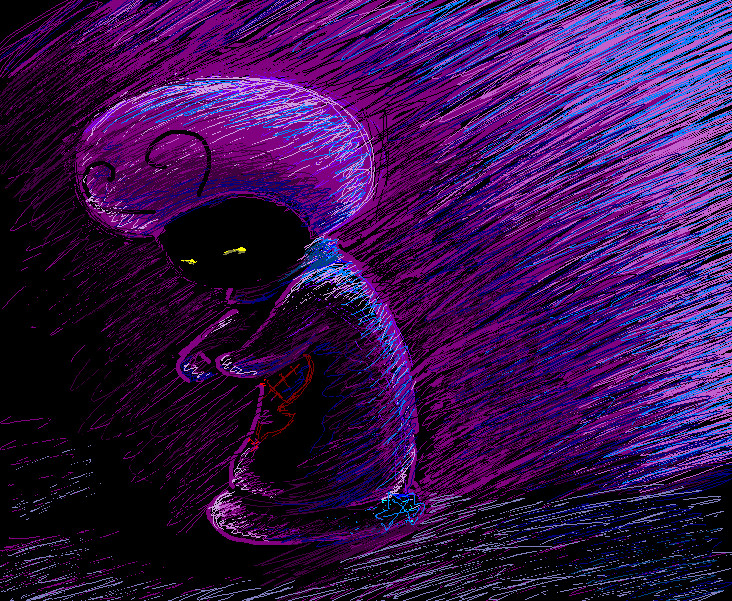
The Charlockian Lion

An ebon-furred beast whose hide cannot be pierced except by wooden weapons, whose poisonous breath can kill a grown men or an elephant, and from whose neck it is said a still more horrid monster will spring should it be decapitated.

I can't believe someone made this.
Duododongo

A two-headed triceratops that lays waste to entire mountainsides in its hunger for human flesh and fire (it eats both with glee). It can kool-aid man through an entire regiment of infantry or castle wall. It is said that the only way to defeat this creature is to teach it chess and then defeat it. One head wants to learn chess, the other thinks chess is stupid.

Tlön The Round

Tlön The Round was a debased heresiarch who founded a religious sect a couple hundred years ago that was chiefly based around the worship of platonic solids. After he tried to summon the moon (so close, yet so far) some adventurers threw him into a bottomless crevasse.

Transformed somehow by that experience to resemble the object of his veneration, Tlön eventually hovered out and has spent the past decade killing people that vaguely resemble the adventurers who threw him in. He is only visible to one person at a time, can imagine objects and creatures into existence, and is embarrassingly bad at mid-battle repartee (think Dubya in a rap battle with a Bronte sister).

The Fractal Hydra

The fractal hydra is but a single snake, but she exists in many times and places, often simultaneously. When you march into her cave, you'll see a big-ass boa constrictor hanging around atop some skeletons or basking in cave-slime. She smelled you coming and is very, very hungry.

Her bite induces spasms and worse: her bite wounds have emit live snakes for several minutes. And we're not talking nice, friendly snakes. No, these are very pissed.

Any creature that injures the hydra for so much as 1 hit point of damage is cursed: at their moment of death, the fractal hydra will emerge from their abdomen. She couldn't possibly fit in there, and the players probably thought that the fractal hydra was long-dead, but it's time for round two. Surprise!


Saturday, September 26, 2015

The Jek

A marrow river runs through these Jek hills.
The Jek inhabited this land when it was young. Identifiably Jek objects show up in the deepest mines of every country on this continent. Their ancient trinkets wash ashore on beaches and the shores of the deepest lakes. When Karanok, the great mountain, erupted and concealed the sun for a year, fire-impervious Jek statues were carried up amidst the pyroclastic flow. In short, we know that the Jek have existed for a long, long time. But they are absent from recorded history. Why?

According to the priests (who asked the gods) the Jek were driven beneath the earth by a storm that did not end for a thousand years. The priests do not say what happened in the deep tunnels. But the wizards do: the Jek found and paid obeisance to strange spirits: Cave Owl, Moon Centipede, and others. Perhaps they worshipped these spirits before they were driven below, and the gods sent the never-ending storm to punish them for it. Perhaps not. Did the spirits make the Jek mad and evil, or was it the other way around?
Jek initiates perform an unknown ritual.
The Jek revere their shamans. Without the shamans, the Jek would starve. At some point during their time below, a spirit taught the Jek shamans to vomit a vast, roiling pool of edible putrescence. The Jek subsisted on this for thousands of years. Now, they cannot digest anything else. When a shaman announces that the feast is immanent, it is a cause for great celebration: entire tribes will organize their receptacles to catch the revolting spew, dancing and singing with gladness.

Entire rivers of a similarly emitted (though less nutritious) substance course over the Jek lands, most resembling oily eddies of pale, liquescent bone marrow.

As a people, the Jek appear to be disfigured albinos. Their skins are covered with sores.  Many Jek lack fully-formed faces. Their shamans always wear masks. Beneath these masks, the shamans have no discernible features at all. Despite this, they are capable of respiring, speech, devouring the bodies of deceased humans for their own shamanic potions (but never anything else), and expelling the questionable foodstuff mentioned above.

Most Jek live in shallow caves or in the trunks of great trees, though there are a few Jek cities. These cities are mobile: every structure in them is carried or dragged by either the Jek or some sort of creature cultivated by them. Their greatest city, Tlel Washke, is built atop a vast stone slab that is chained to the towering reanimated corpse of Washke, who once styled himself to be the king of giants. Tlel Washke is dragged across the ground by this festering ex-king, following a nonlinear path according to the Jeks' inscrutable wishes.

The Jek do not have much in the way of appreciable metallurgy. They weave baskets and clothes, carve statues and render them indestructible, make amulets, and build strange dwellings from wood and stone and cloth.  The shamans produce a certain number of finishing goods by devouring humans and then regurgitating that material in a new form. For example, Jek swords consist of impossibly intricate human scrimshaw. A tribe preparing for war will feed dozens of prisoners to their shamans, each day, while those shamans laboriously vomit up sword after sword with seemingly no limit to the amount of material they can store inside their person. The Jek do not possess a written language, nor do they seem capable of learning one.

Near Jek, things are not as they should be. Their presence causes dreams to superimpose over reality. Large groups of Jek often appear to have the same face. Water droplets rain upwards from pools and rivers into the yawning sky. Birds cry out dire warnings in diverse languages.

A Jek emissary might appear as your best friend, you, a deceased pet from your childhood, or a horrid shimmering image in your dreams. The message relayed will not make sense. However, the Jek's intent will be obvious: hostility.

Saturday, September 19, 2015

The Four-Faced Angels


Quadriphonsical antagonist or condescending passerby? You decide. Either way, the self-proclaimed forge god wants his piece. He also probably wants to replace humanity with these things, but doesn't have the divine clout.

Tuesday, September 1, 2015

The Sun Devourers

Click for a larger version, friend!
I really, really like these guys. It's just a basic feature of Aztec mythology that the progenitors of mankind were also skeletal star demons that want to eat people and end the world. I used them in an earlier post as one of the things that will go wrong if you lock up the wrong archangel for too long. Don't lock up archangels or you'll regret it!

Saturday, August 29, 2015

The Trebithene Blade

Art source.
The Trebithene Blade is the Stradivarius of swords, forged nearly three hundred years ago by Ganar of Grösh, the greatest weaponsmith of the age. Though Ganar created over a dozen magical weapons at the height of his craft, the Trebithene Blade is by far the finest. Her metal is alloyed with ore stolen from the smith-god's forge. The runes etched into her blade promise death in the language of the underworld. Most puissantly, Ganar trapped an archangel in the pommel. During combat, the angel sings terrifying hymns (everybody can hear this). The rest of the time it pleads to be set free (only the wielder can hear this).

It is called Trebithene because the blade was commissioned by the Duke of Trebithene, who used the blade in his city's struggle for independence. During the post-war period known as The Lenient Reprisals, the blade was stolen by an assassin and removed from the city. From there, the blade pops up in history every dozen years or so, always in the hands of a great fighter.

Hooks And Problems

Most people have heard of the Trebithene Blade, and definitely every fighter has. It's still on the Trebithene flag! If you are seen or known to possess it, a fighter of your level will eventually appear to challenge you to a duel to the death for it. This reoccurs every 1d4 weeks in nature, or 1d4 days in a city or large town. If you ever conduct yourself dishonorably in such a duel and word gets out, future challengers will stop relying on honorable combat and attempt to ambush you while your party is busy fighting other monsters, or else use ransom and theft. It's not that the sword is cursed, it's just so famous that people can't help but take their shot.

Your players probably find the sword in the hoard of some big dragon-style creature, still clutched in the now-skeletal hands of the last guy to own it.

Without Ambriel around, the tzitzimimeh that are normally stuck in the 
mesosphere can come down to eat people whenever they want. (Source)
The Angel In The Pommel

The archangel in the pommel is named Ambriel. Her sacred task is to protect humans from malicious stellar entities. Like, if your campaign world has an evil star that whispers recipes for destroying the planet, it's Ambriel's job to stop that. She also tries to minimize the madness that can be caused by evil astrological influences. Things have gotten really ugly during the three centuries that she has been stuck in this stupid sword.

For example, the tzitzimimeh are a swarm of impossibly evil, vaguely astrological creatures that infest the regions between stars. They spend millennia swimming the void in search of inhabited worlds from which to feed. Since Ambriel has left the picture, more and more of them are showing up.

Another problem is the madness inflicted by unlucky stars. In the normal course of events, Ambriel will wander the world, invisibly curing or warding off zodiacal inflictions of this nature, or even killing people born under particularly evil signs. For most of history, she has kept things running smoothly, but she has been gone so long that there are entire cults of star-worshippers working all kinds of unseemly magic. For example, Ambriel senses that the yellowcake-priests of the Vapid Desert have almost built a working Time Rattleback with the help of The Star That Speaks.

Ambriel is acutely aware of the problems resulting from her absence. She'll try to explain the situation to the players and beg them to free her and destroy the sword. The blade's indestructibility will prove problematic even if a player is unusually willing to listen to a suicidal talking sword. Maybe the Frog-God's obliterating gullet could dissolve it. The caustic tears of the Vornish Pope would likely suffice to corrode it, but good luck getting that guy to cry. I'm sure your players will have their own ideas.

Four-faced murder angel, comin' atcha.
The smith-god's angels don't fuck around.
The Smith-God's Metal

Three centuries is nothing to Vhalkana. Never the most social or emotionally intelligent of gods, he can nurse a grudge for literally forever. He wants the sword back because it has his ore in it, because he's curious what the mortals did with it, and because he's angry that the sword is so tacky looking to his rarified, apollonian tastes. He is also secretly afraid that it might be superior to some of his work. The quicker it is removed from mortal hands, the better.

The master thief that snuck into his godsmithy and filched the ore is long dead, his soul well-hidden. Ganar Of Grösh died of respiratory disease at an advanced age, and Vhalkana has placed his soul in the hottest part of his forge, but that is insufficient to diminish the anger of a divine being. He has worked out an arrangement with the other gods so that he receives the soul of anybody who ever wields the sword, whose souls are then smelted down and used in Vhalkana's many projects.

Stuff the divine blacksmith might do:

  • Send the sword-holder dreams in which a titanic figure places them on an anvil and demands that the sword be brought to their temple. The temple is somewhere really inconvenient, like it's called The Lightning Caldera, and in addition to being a mostly-dormant volcano it also is the place struck most often by lightning on the planet. When Vhalkana is in residence he uses the lightning to superheat his forge.
  • Curse the sword-bearer to be unable to make anything. No item crafting, obviously, but also unable to make so much as a sandwich.
  • Curse the player so that any nonmagical objects they possess break at the slightest provocation. 
  • When he has time, Vhalkhana will sometimes make some angels and send them to retrieve the sword. The forge-angels have four faces. One of the heads chants blessings and heals. Another has a breath weapon that expectorates exquisitely formed, high-velocity swords and daggers. A third head curses foes with vertigo and palsies. The fourth head has a significant bonus to diplomacy checks but can't ever get the other heads to let it talk before attacking.

Thursday, August 20, 2015

Tenebrous Monstrosities

This once placid myconid is now officially Up To No Good.
Fungi and arachnids exposed to concentrated unlight will quickly develop unseemly characteristics. Other creatures sicken and die, but they seem weirdly increased by their exposure.

Any monstrous spider or fungus can be affected. And sure, yeah, there are not a ton of fungal monsters in the monster manual, but the internet has some that you might like.

Once one of the eligible creature types has been irradiated with a dose of unlight, it develops a result from the table below over the course of a day or so. All effects are permanent, and multiple exposures will not result in further change. Also, you may want to give groups of identical abilities off here to keep things simple.

Tenebrous Mutation Table (d10)

1: The creature's intelligence increases to 20 and it's alignment changes to evil.

2: The creature exudes a shroud of inky spores in a 15-foot radius similar to a deeper darkness spell. The spores do not inhibit fungal or arachnid creatures.

3: Any creature struck by the creature's melee attack has their speed reduced to 2 until the end of their next turn as strands of semisolid darkness cling to them and inhibit their movement.

4: The creature's size increases in size until it is huge (10 feet by 10 feet). It gains +50 max hit points and automatically succeeds on the first saving throw it rolls, each encounter.

5: The creature can pass effortlessly through walls and doors of less than a foot in thickness unless they incorporate significant quantities of lead, gold, or another heavy metal.

6: The creature is invisible during the first round of each combat. This isn't an all the time thing, it's more like the unlight kicks in when it gets agitated enough for a fight.

7: The creature permanently bilocates. It occupies two spaces, but is the same creature. Damaging one damages the other, et ceteras. The two creatures can travel any distance apart but will be pulled into other planes together if one passes through a portal or plane shifts.

8: The creature gains resistance (half damage) against spell damage. It can also exhale a 5-foot wide, 25-foot long breath weapon of disintegrating darkness, inflicting 5d6 disintegration damage, Reflex half. It can do this three times per day but not two rounds in a row.

9: The creature grows a horrid mouth full of inky teeth in an unlikely location on it's body. The mouth makes an extra attack with the creature's normal attack bonus, each turn, inflicting something like 2d8 damage on a hit.

10: The creature sprouts a set of asymmetrical wings capable of propelling it through air, water, or interstellar void. It also develops the ability to reproduce via fission and to digest any organic material, if it did not possess those abilities before.

Tuesday, August 11, 2015

Qelong River Demon: Giant Catfish


(Click to enlarge. The art is from here.)

The third in my little series of Qelong creatures.  This one is intended as a sort of boss monster.  The sort of thing that surfaces right when your sampan runs aground on a submerged log, or when a battle with a clutch of naga-kin runs overlong.

Monday, March 23, 2015

Qelong: Aakom-Tainted Vulture

(click for larger)


A simple monster for use in Kenneth Hite's Qelong. For large groups of monsters I prefer relatively simple game mechanics to keep things from slowing down. I could run a fight with twenty of these things and not break a sweat. You may wish to adjust the amount of aakom poisoning depending on what rules you are using.

Thursday, March 12, 2015

The Book Of Horrid Births


Spontaneous generation is a nonmagical, scientific fact.  If the correct ingredients are combined under auspicious circumstances, a living creature will result.  The simpler recipes yield simpler creatures.  Combine the dead flesh of most creatures and warm air, you'll eventually end up with maggots.  With sophisticated recipes and ingredients, more complex organisms can be generated.  By combining and modifying recipes, you can creature stranger, less natural-seeming creatures.  Neither magical expertise nor special knowledge are required.  Follow the recipe correctly and creatures shall result.

Simple Recipes

Scorpions: By bathing correctly sorted strands of straw and fresh basil in bright sunlight for a day, you can create a swarm of small scorpions.  They will inhabit the area of their birth and behave generally like scorpions.  Their stings inflict great agony on most creatures, while repeated stings can potentially kill smaller creatures.  The scorpions will treat their birth-spot as their home and will be loathe to leave it.

Eels: Large clumps of rotting vegetable matter and moving fresh water are necessary, as are some drops of ichorous slime extracted from predacious sea-fish organs.  Once that is obtained, you can produce a tremendous number of carnivorous eels with gleaming pink eyes.  The eels produced by this recipe have somewhat unstable physical forms, and will seek to rectify their situation by consuming the more stable flesh of other living creatures.

Bear Cubs: Grave moss, desiccated vineal plants, moonlight, and caustic bile all combine to produce a creature very similar to a large bear cub.  The cubs produced by this recipe will regard the first creature they behold as their mother and become incredibly devoted to them.  Sadly, the recipe is imperfect and the bears will rot rather than age.  However, they can withstand a tremendous amount of decomposition before finally dying.

Complex Recipes

Eyeless: With a vat of combined fats and a steady geomantic current, you can give birth to a creature that resembles a fully-grown human in most ways.  The chief exceptions are that it does not possess a soul (not having been created by the gods) and, perhaps as an extension of that, does not possess eyes.  The creature begins its life amicably enough, grateful for its creation.  Sadly, any initial empathy or gratitude grows cold and resentful over a matter of weeks as the eyeless increasingly resents its flawed nature.  Eyeless make use of terrifyingly effective echolocation.  They are sterile.

Wall-Slug: With powdered river-stones, aqua regia, starlight captured in spheres of mirrored glass, and spore-dust from a foul species of mushrooms, you are able to create a true horror.  The resulting entity is an invertebrate creature composed of iridescent, biliously glowing slime that prefers to reside and travel on vertical surfaces, ignoring gravity as we understand it.  The creature will attack its creator immediately but can be induced to fearfully avoid them for 1d6 days at a time by reducing it to half its max hit points.  The creature possesses weak gravimetric muscles, passably effective x-ray vision, and can emit clouds of caustic vapor.

Amphisbaena: Terrestrial slime, barley harvested at the height of summer, manure, and quicklime must all be combined and baked under extremely hot conditions in order to produce the amphisbaena. This serpent boasts a head on each end and eyes that shine so brightly that it is difficult to see in their presence.  The creature whispers blasphemous secrets to its creator regardless of distance.  Each day the amphisbaena conveys a secret of some kind to their creature regarding a completely arbitrary topic chosen by the DM, though the creature reliably reveals the details of a spell that their creator could cast at least once per week.  There is also a cumulative 1% chance per week that the whispers drive their creator permanently, violently insane.

Sunday, January 18, 2015

It That Crawls

(click for bigger)


I wanted a quasi-original critter to haunt the Carcosa-themed plateau in Kenneth Hite's truly outstanding Qelong setting. The art is from this guy, who apparently just churns out the visual equivalent of solid gold. You should be able to use this guy in 3e or 5e without too much trouble. You'll need to increase attack and damage for the former, certainly. It is designed to be unstoppable, but not necessarily completely lethal to an entire party.

Note that "stun" in my games means that the player loses their move action, not their entire action. So It stuns people telepathically and then eats them, and if it ends up off the plateau for whatever reason, It will start demolishing the campaign setting, hex by hex.

Sunday, May 31, 2009

Subverted Modron

Subverted Modron
A clockwork outsider from the lawfully aligned planes, reprogrammed by a clockwork mechanician to serve him.
Init -5
Speed 6
HP 100, Bloody 50
AC 13
F +5 R +1 W+3
-Resists: poison 10, misc 10 (see below)

Pliers +10
Dmg 1d6 + 5.

Orderly Combat: Once per round when the modron is targeted with an offensive spell, he may immediately cast a spell that targets the source of the spell.

Spells: Burning Hands, Flame Arrows, Incinerating Touch. (Swap with any first to third level spells that you like)

Orderly Adaption: Once per round when the modron suffers energy damage, he may immediately change his misc energy resistance to that energy type. This does not help against that particular energy attack, but remains that energy resistance until the end of the encounter or the modron decides to change it.

Logical Aura: Any creature opposing you must roll a Will save DC 20 at the start of the encounter, or become delirious for the duration of the encounter.

Wednesday, May 20, 2009

Clockwork Prawnalope aka "The Brillig Beasty"


This was the boss of the "futuristic" clockwork dungeon that my PCs have just hacked their way through. It was a pretty neat dungeon, I'm digging the clockwork chic. I omitted the limb loss stuff that all my bosses/minibosses in this campaign have.

Mechanical Prawnalope (huge construct)

A mechanical creatures resembling a cross between a deer and a giant prawn.
Init +5
Speed 8
HP 140, Bloody 70
AC 17
F +11
R +4
W +3
-Resists: Electric 20

Claw +9 (Crit 17-20)
dmg 1d10
-May make Whirlwind Attack as a full round action.

-Ram: When struck by a ranged attack or spell, the prawnalope may immediately charge the source of the damage and make an attack, assuming that the target is within its movement range. If the attack hits, the target is knocked prone unless he is wearing heavy armor.

-Bloody: When first bloodied, the prawnalope may emit a medium range lightning bolt that is 10' wide and inflicts 24 damage, Reflex 19 for half.
-While bloodied, the prawnalope's whirlwind and ram damage increase by 2d6 damage.

-Death: When destroyed, the prawnalope explodes, causing 8 fire damage to creatures within short range.

Wednesday, May 13, 2009

Rust Snark


My present adventure is going pretty well. The PCs have found a clockwork garden from a lost civilization, a sort of clockwork Xanadu. They fought a slightly tougher version of the Snark, given here. The picture is by me, though I based some of the line work on a random google image that I found.


Rust Snark (huge construct)
A clockwork monster that resembles a cross between a shark and a lobster. It is surrounded by a cloud of poisonous corrosion.

Init +0
Speed 6
HP 100, Bloody 50
AC 17
F +10 R +2 W+5
-Resists: Fire 10, Cold 10
-Vuln: Electric 5

Chomp +9 Dmg 1d12
-Critical 18-20: On a critical, the shark bites off a limb. Any equipment worn on that limb is destroyed, even if not made of ferrous metal. Limb Loss Table (d6): 1-3: Leg, 4-5: Secondary Arm, 6: Primary Arm.

Aura: On the snark's turn, it automatically inflicts 4 poison damage to all adjacent creatures.

-Breath Weapon: The creature may exhale a short range cone of corrosion as a move action, 14 poison damage, Reflex 17 for half. It may not use this ability two rounds in a row. If a natural roll of 1-3 is rolled on this save, a piece of equipment is also destroyed. Roll 1d10 to determine which slot: 1: Head, 2: Neck, 3: Hands, 4: Waist, 5: Cloak, 6: Feet, 7: Ring, 8: Weapon/Implement, 9-10: Armor.

-Like Clockwork: This creature is immune to mind and metabolic effects.

-Bloody: When the snark becomes bloodied, it may immediately charge and make a chomp attack against the source of the damage that rendered it bloody, if the damage source is within range.

-Death: When the snark is slain, it explodes in a cloud of burning corrosion. Creatures within short range suffer as though targeted by it's breath weapon.

Thursday, April 23, 2009

Doppleganger Part I


Tim responded to my earlier monster post with one of his own, though he has not yet released it. My turn, again:

Lumpenproletariat Doppleganger
A harmless beggar, or a criminal shapeshifter?

Init +2
Speed 6
HP 20
AC 13
F +2 R +6 W+0

Imitated Weapon (type is irrelevant) +5
Dmg 1d8, sneak attack +1d6

Sympathetic Shapeshifting: The doppleganger may transform into an identical copy of a humanoid from whom it has obtained an object. The object must have been handled most recently by the humanoid that the doppleganger wishes to change into, and must have been handled during the past hour. Once copying a creature, the doppleganger mimics that person's appearance and equipment with perfect accuracy, though none of it is functional. The doppleganger may remain in this altered form for up to a week.

Combat Trickery: Once per encounter, the doppleganger may use its unnaturally protean form to misdirect a melee attack that targets it. The attack is instead directed at another creature to whom the doppleganger must be adjacent.

Racial Immunities: The doppleganger is immune to any spells that reveal alignment, veracity, identity, culpability, or location.

Biology

In its natural form, this doppleganger appears to be a pale humanoid with no facial features save large gray eyes, and the only other form that it may assume without using its sympathetic shapeshifting ability is that of an unremarkable beggar.

This variety of doppleganger subsists on a peculiar diet consisting entirely of alcoholic beverages, which do not cause inebriating effects in its species. In order to pay for it's liquid meals, the creature will often assume the shape of people that gift it with funds, and then commit simple crimes such as mugging and burglary. It's assumed form will usually protect it from justice.

Tuesday, April 21, 2009

A Shot Across The Bow


Tim wanted to separately stat some of the monsters from our list earlier. So, in my own rules shorthand, here's one:

Chimney Cadaver
During the day it is a powerless spirit, but at night it becomes a silhouette of ghostly ash that emits choking sobs as it terrorizes the living.

Init +2
Speed 6
HP 40
AC 16
F +5 R +3 W+3

Vulns: 5 cold.
Resists: 15 fire.

Burning Touch +6
Dmg 1d6+1

Black Lung: Every three rounds, a chimney cadaver may exhale a 15-foot cone of burning ash. Any creature hit suffers 1d10 fire damage, Fort 13 for half. Any creatures that fail their save are also slowed for the next day (their speed is reduced to 10 feet).

Death Knell: When reduced to 0 hp, the chimney cadaver explodes in a fiery conflagration. Any creatures within ten feet are affected as though hit by the black lung ability.

Undying: A chimney cadaver that is slain will reform after 1d6 days if its body is not found and given a proper burial.

Spawn: Any creatures slain by the chimney cadaver's black lung ability that do not receive a proper burial will return in 1d6 nights as a chimney cadaver.

Wednesday, April 8, 2009

Dubious Monsters


Before I kick off the rest of "fix third edition" week, I thought I'd post some of the monsters that my friend Tim and I came up with. We were discussing the difficulty of expressing man versus nature in roleplaying games, and decided that fauna is the most dynamic way of representing this. D&D is a game about killing monsters, not about dying from impersonal forces like thirst or exposure.

A number of monsters resulted from this. Perhaps you might enjoy them.

1. Ants that use psionics to compel you to set up camp near their hills. Perhaps they also have learned to set up camp fires.
2. Carrion-eating bees that spray you with particularly fragrant honey in Black Bear Forest. "Why the fuck would bees spray us with honey?" Then after they defend themselves from a hungry bear, they may find a half eaten deer carcass covered with bees.
3. A mimic that has learned to take the form of a tent.
4. Flamethrower eucalyptus that create their own controlled burns. Possibly occupied by fire-resistant drop bears.
5. A herd of horses that have developed a taste for human eyes.
6. A ghost shepherd. A murder herder, if you will.
7. A sentient field of wheat with razor-sharp stalks. "Lalala I love walking through fields OH GOD BLOOD EVERYWHERE..." Very Jared Diamond.
8. Birds of paradise whose feathers look like loved ones, that are used to lure you into quicksand, and then take your gems and items to festoon their bowers.
9. Dopplegangers that can only transform into beggars, prostitutes, or urchins, and subsist solely on the human flesh of the lower classes. "Don't give charity to that man, he could be a doppleganger." This idea beget several ideas relating to adaptive radiation and dopplegangers that can only imitate specific socioeconomic classes.
10. A blue-collared doppleganger that subsists purely on fermented beverages and sacramental foods.
11. A doppleganger baron that can subsist only on precious metals.
12. A colony of benevolent cranium rats living in the slums giving people dreams on how to exploit the rich. All they demand in return are fine and exotic cheeses.
13. An urban blight mold that spreads from house to house rotting the building materials and filling the residents with despair.
14. The ghost of a chimney sweep that has a black lung breath weapon. And his body is still stuck in a chimney somewhere.
15. Undead urchins that reach into your pocket and pull out a kidney. Organ pickpockets. They use the organs to fuel healing magic that they sell on the black market. Drunkards are useless to them; being drunk is surefire protection from their predations. Also lepers and those with consumption.
16. A psychic leech shaped like a top hat. It commands the creature that wears it to commit indignities upon the poor so that it may feed off the mental anguish. If a haberdasher tries to mend it, it screams, sprouts legs, and scurries off into the shadows. Also it gives off madness-causing fumes when threatened.
17. A symbiotic monocle-creature that allows you to see how much money a person is carrying and derives sustenance from the psychic energy produced by a rich wearer's feelings of contempt.
18. Literal street urchins of the spiny sort, that feel upon offal.
19. Sewage elementals, naturally.
20. A murderer that turns the soul of each person it kills into a brick, and builds a house. When he finishes the house, he stops murdering.
21. The ghost of a pet animal that died of starvation when its owners failed to feed it, and now possesses others' pets until they die. It feeds on the blood of its host's owners, and slowly mutates the owners into another version of it as a means of reproduction. "My, but your sideburns are looking exceptionally whiskery today."